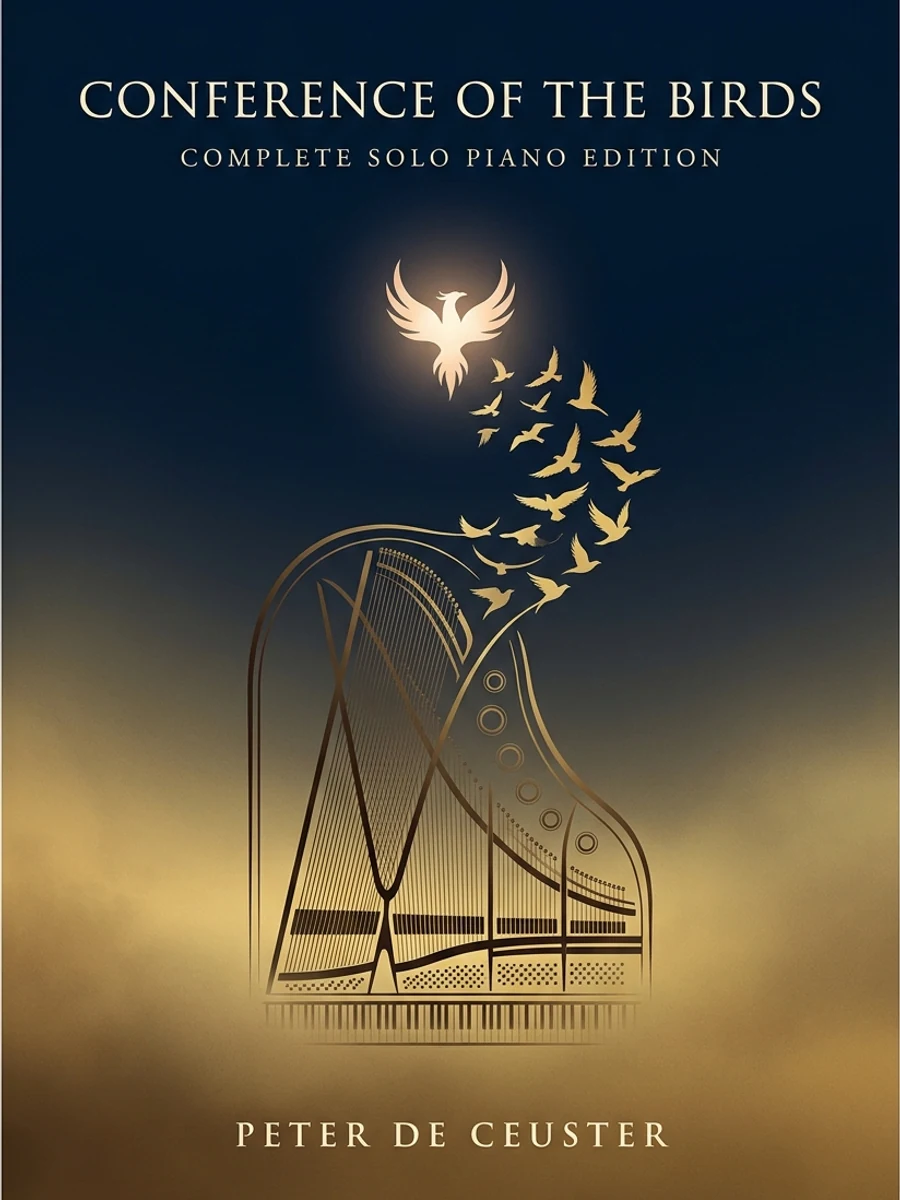
Conference of the Birds: Complete Solo Piano Edition
Three monumental works for solo piano spanning 142 engraved score pages and 45:38 of continuous music: Echoes of the Simurgh (73 pp., 7:47, dedicated to Lily Maisky), Sonata Dantesca: Requiem (38 pp., 21:23), and Sonata Caelestis, Opus 2 (31 pp., 16:28)—paired with classical piano history, Iranian Simurgh lore, critical analyses & biography.
Conference
Edition Cover
Complete Solo Piano Edition (158 pp.): Classical piano history, Iranian Simurgh lore & 3 full engraved scores.
Echoes I
Echoes of the Simurgh (for Lily Maisky, p. 1 of 73): F minor / A♭ major, ♩ = 235, 19,375 notes (7:47).
Echoes II
Echoes of the Simurgh (p. 37): Contrapuntal flight across seven valleys in full-keyboard bravura.
Dante I
Sonata Dantesca: Requiem (p. 1 of 38): Prologo Il Lamento—21:23 D-minor descent across nine episodes.
Dante II
Sonata Dantesca: Requiem (p. 23): Furioso Elettrico & Grandioso apocalittico toward L'Abisso Finale.
Caelestis
Sonata Caelestis, Opus 2 (p. 1 of 31): 720 measures, 23 tempo pivots from G minor into treble light (16:28).
Revelation
I. Echoes of the Simurgh
73 score pages • 454 measures • 19,375 notes (7:47). Dedicated to Lily Maisky, inspired by Attar's mystical Persian pilgrimage.
II. Sonata Dantesca: Requiem
38 score pages • 640 measures • 15,168 notes (21:23). Nine inscribed episodes from Prologo: Il Lamento to Coda: L'Abisso Finale.
III. Sonata Caelestis, Opus 2
31 score pages • 720 measures • 11,138 notes (16:28). Twenty-three structural tempo pivots spanning A0 to B7.
History, Myth & Score Criticism
Opens with classical solo piano history and Iranian Simurgh lore, followed by impassioned essays after every work and composer biography.
Composer’s Note · Three Monuments at the Keyboard
“Together these three scores span 142 pages, 1,814 measures, and 45,681 notes: an ascent through Persian myth in Echoes of the Simurgh, a tragic descent through nine Dantesque stations in Sonata Dantesca: Requiem, and a twenty-three-tempo celestial counterpart in Sonata Caelestis, Opus 2.”